
Description
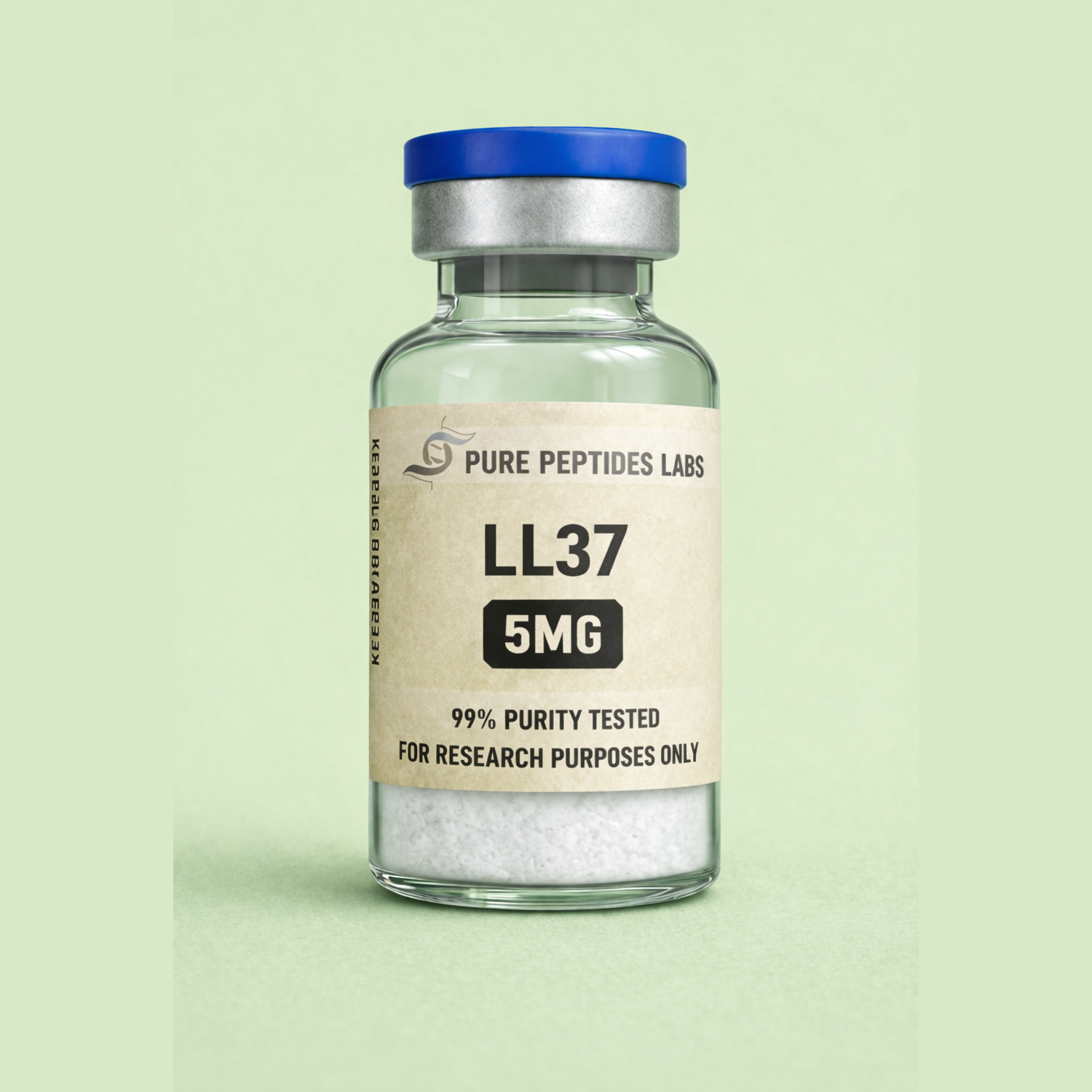
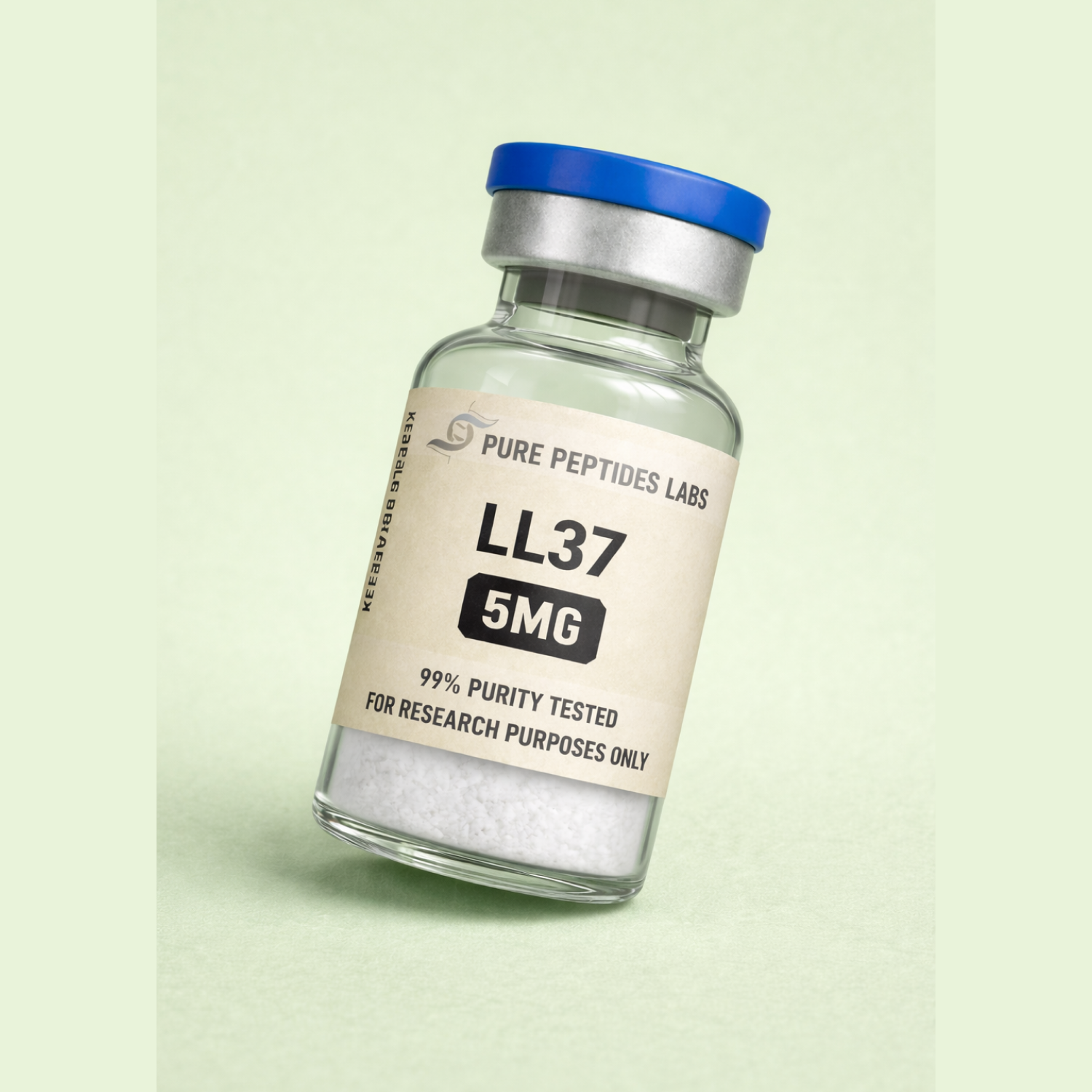
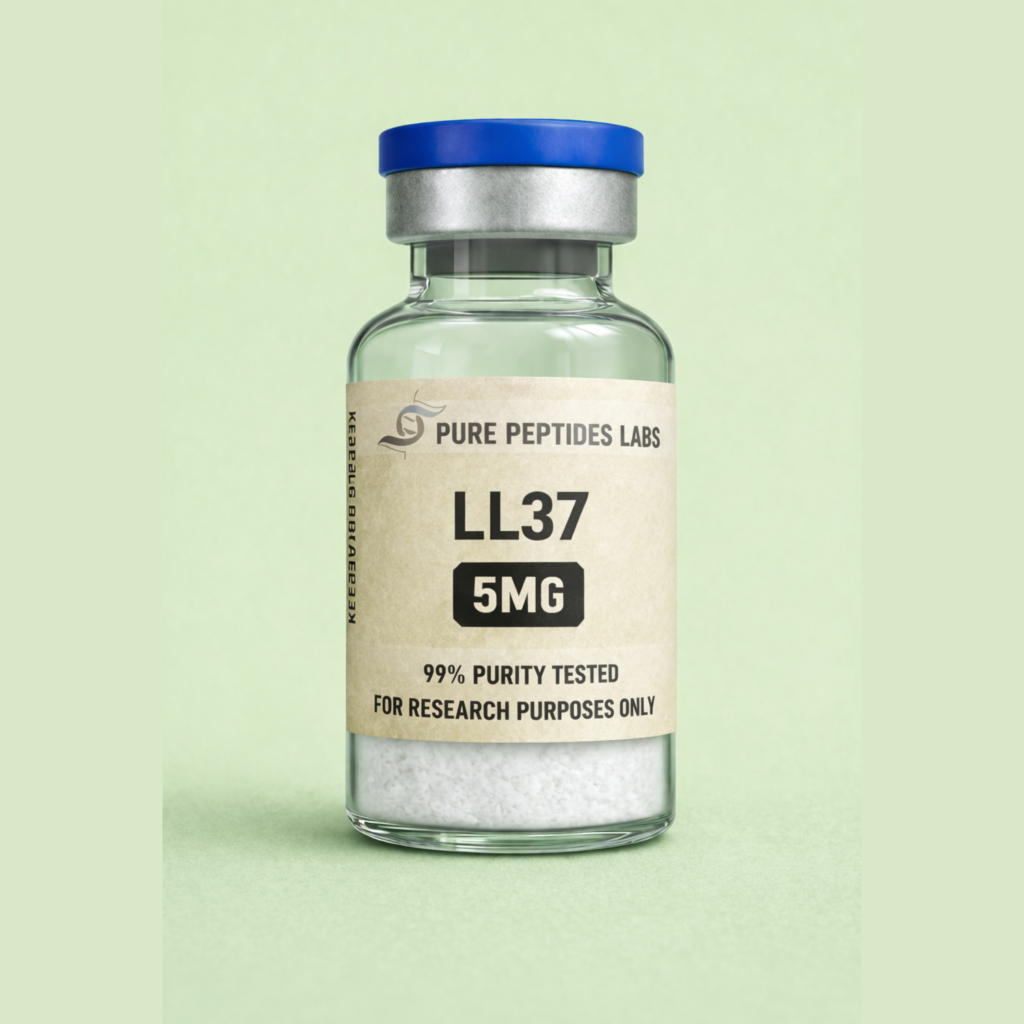
Advance Your Innate Immunity and Antimicrobial Research with LL37 5mg
LL37 5mg is a highly specialised research peptide. It belongs to the cathelicidin family of antimicrobial peptides. Researchers actively study it for its potent innate immune defence properties. Furthermore, its well-established scientific literature supports diverse immunological and microbiological research applications. Consequently, it remains one of the most compelling antimicrobial peptides in modern biomedical research.
What is LL37?
LL37 is the only human cathelicidin antimicrobial peptide identified to date. It derives from the C-terminus of the human CAP18 protein. Additionally, it consists of 37 amino acids with a characteristic leucine-leucine N-terminus. This structure gives it both antimicrobial and immunomodulatory properties. Therefore, researchers value it highly for innate immunity and host defence studies. Moreover, its broad-spectrum activity makes it a compelling subject across multiple research disciplines.
Antimicrobial and Anti-Biofilm Research
LL37 actively disrupts microbial cell membranes in research models. It demonstrates broad-spectrum activity against bacteria, fungi, and viruses effectively. Additionally, it inhibits biofilm formation in controlled study environments. Consequently, researchers use it to examine antimicrobial resistance mechanisms precisely. Furthermore, its membrane-disrupting mechanism provides reliable and consistent research data. Therefore, it is a powerful tool for antimicrobial and anti-biofilm investigations.
Innate Immunity and Host Defence Research
Researchers apply LL37 in innate immunity studies extensively. It actively modulates toll-like receptor signalling in research models. Additionally, scientists examine its role in neutrophil and macrophage activation. Furthermore, it supports investigations into host defence peptide biology. Moreover, researchers study its influence on dendritic cell maturation and function actively. Consequently, it provides valuable insights into innate immune activation and host defence research.
Wound Healing and Tissue Repair Research
Emerging studies explore LL37 in wound healing research models actively. Researchers investigate its potential role in keratinocyte migration and proliferation. Additionally, scientists examine its influence on angiogenesis and vascular repair pathways. Furthermore, it shows significant promise in chronic wound and skin barrier repair research models. Moreover, its tissue repair properties attract considerable interest in dermatology and regenerative medicine investigations. Consequently, it remains a highly relevant compound across wound healing and tissue regeneration research disciplines.
Anti-Inflammatory and Immunomodulatory Research
LL37 actively supports anti-inflammatory research investigations. Researchers study its influence on pro-inflammatory cytokine modulation mechanisms. Additionally, it provides insights into LPS neutralisation and endotoxin suppression in research models. Moreover, scientists examine its role in resolving excessive inflammatory responses. Furthermore, emerging studies explore its influence on autoimmune and inflammatory disease pathways. Therefore, it proves to be a valuable compound in immunomodulation and inflammatory biology research.
Cancer Biology and Anticancer Research
Researchers actively investigate LL37’s role in cancer biology. It demonstrates selective cytotoxic properties against cancer cells in research models. Additionally, scientists examine its influence on tumour cell apoptosis and membrane disruption pathways. Furthermore, it supports investigations into lung, ovarian, and colorectal cancer mechanisms. Moreover, its ability to selectively target cancer cell membranes attracts growing interest in oncology research. Consequently, LL37 proves to be a versatile compound across multiple cancer biology research areas.
Antiviral Research
LL37 actively supports antiviral research investigations. Researchers study its influence on viral envelope disruption mechanisms. Additionally, it provides insights into respiratory virus and enveloped virus inhibition in research models. Moreover, scientists examine its role in modulating antiviral immune responses. Furthermore, emerging studies explore its influence on SARS-CoV-2 and influenza research models actively. Therefore, it proves to be a valuable compound in antiviral and infectious disease research.
Why Choose Our LL37 5mg?
Our LL37 5mg meets the highest quality standards consistently. We subject each batch to rigorous third-party testing. This testing confirms accurate peptide concentration every time. It also verifies sterility and structural integrity reliably. Furthermore, our lyophilised format ensures long-term stability for extended research use. Therefore, researchers receive a dependable product for every study.
- ✅ High-purity research-grade antimicrobial peptide
- ✅ Accurately measured 5mg vial
- ✅ Lyophilised for long-term stability
- ✅ Third-party tested for purity and potency
- ✅ Fast dispatch with reliable packaging
Designed for Researchers, By Researchers
LL37 5mg suits a wide range of immunological and microbiological research applications. It performs consistently across in vitro and in vivo study models. Moreover, research institutions trust its quality and batch consistency. Additionally, independent scientists rely on it for exploratory antimicrobial and innate immunity investigations. Furthermore, its unique cathelicidin structure makes it a distinctly valuable research compound. Consequently, it remains a top choice for serious biomedical researchers globally.
Disclaimer: LL37 5mg is intended strictly for research and laboratory purposes only. It is not approved for human consumption, therapeutic use, or veterinary application. This product is sold exclusively to qualified researchers and scientific professionals. It must be handled in accordance with all applicable laws and regulations.


Reviews
There are no reviews yet.